Quick answer
AOV smoke vents are governed by Approved Document B, the Fire Safety Order and relevant British and European standards. The responsible person must keep systems maintained and operational, and compliant.
AOV smoke vent regulations govern how these systems control smoke during a fire. AOV systems can protect common escape routes such as stairways, corridors and lobbies. Their role goes beyond installation because ongoing testing and maintenance are legal duties. Current regulations also place greater focus on fire safety management. This makes AOV compliance an ongoing responsibility for owners.
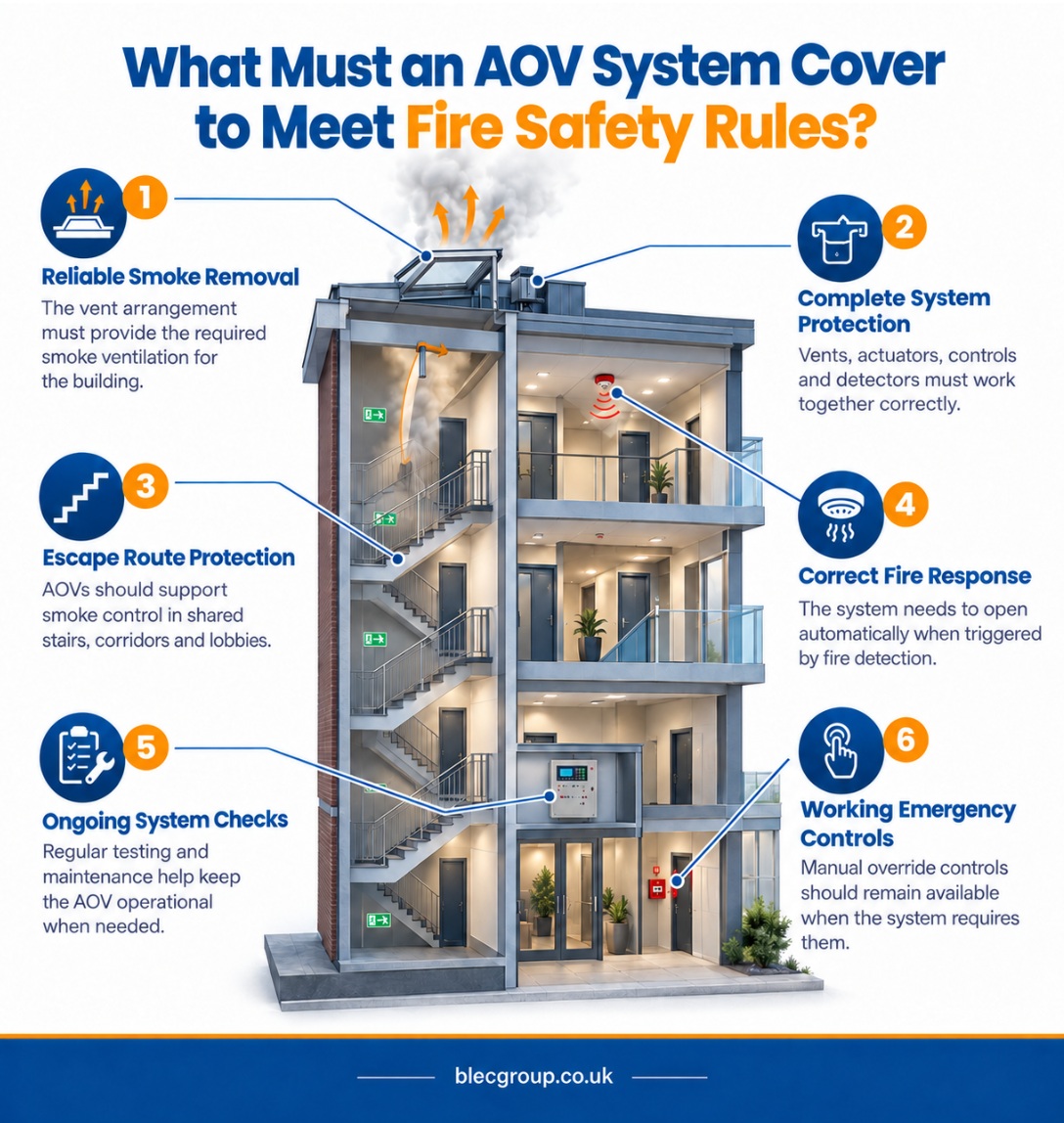
- AOVs support escape routes during fires by opening automatically to help clear smoke from common areas.
- The responsible person has an ongoing legal duty to keep the system in efficient working order and good repair.
- A compliant vent does not guarantee a compliant system because design, installation, commissioning and maintenance also matter.
- AOV expectations are changing as fire safety guidance comes under further review.
What Is an AOV Smoke Vent System?
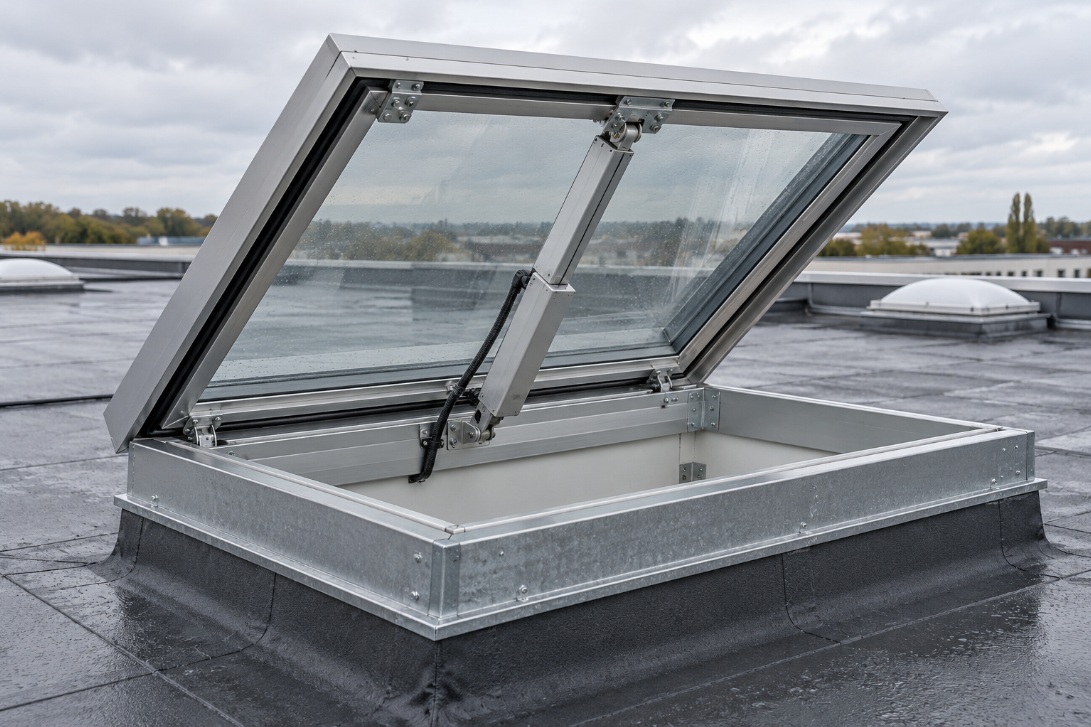
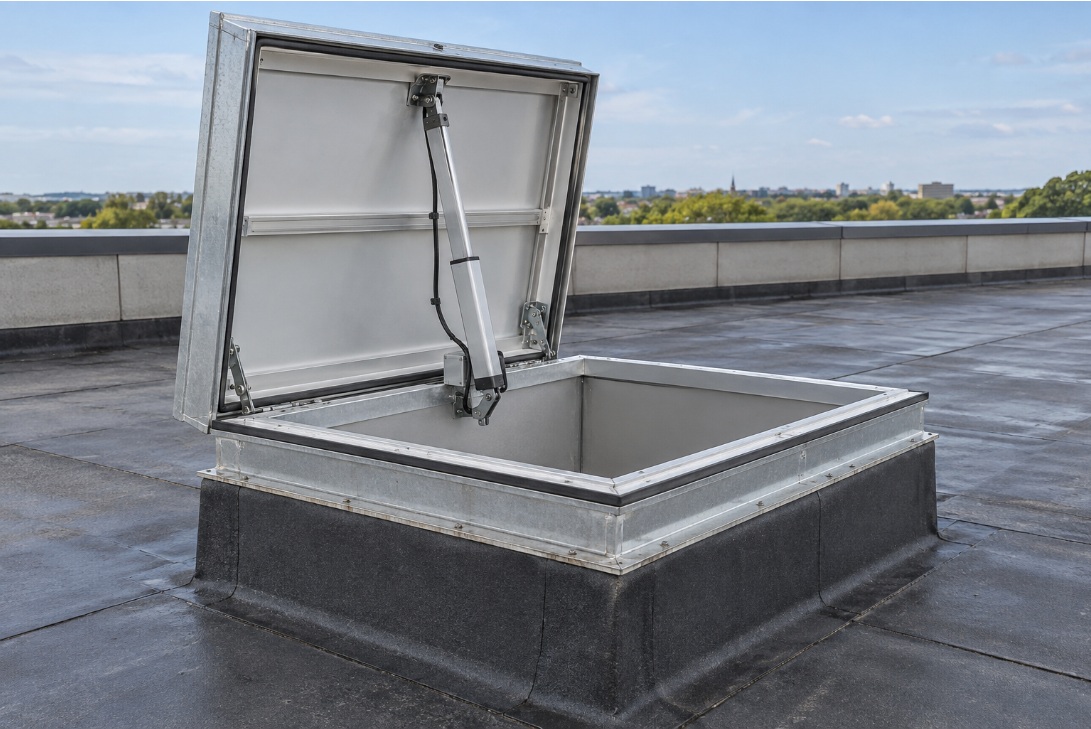
An AOV, or Automatic Opening Vent, is part of a designed smoke control system. It opens automatically when a fire alarm or smoke detection signal activates the system.
The sequence is straightforward. A detector or fire alarm sends a signal to the AOV control panel. The panel then activates an actuator. The actuator opens the vent, window or louvre.
Once open, the vent allows smoke and hot gases to escape from the affected area. This can help keep common escape routes clearer for longer. It can also support access for firefighters.
An AOV system normally includes an:
- AOV vent
- Actuator
- Control panel
- Smoke detector
- Or fire alarm interface and manual override controls.
An ordinary window is different. It does not form part of a designed smoke control arrangement simply because it can open.
Where Are AOV Smoke Vents Required?
AOV smoke ventilation is commonly used in common escape routes such as protected stairways, corridors and lobbies. The exact arrangement depends on the building design, escape strategy and requirements of Approved Document B.
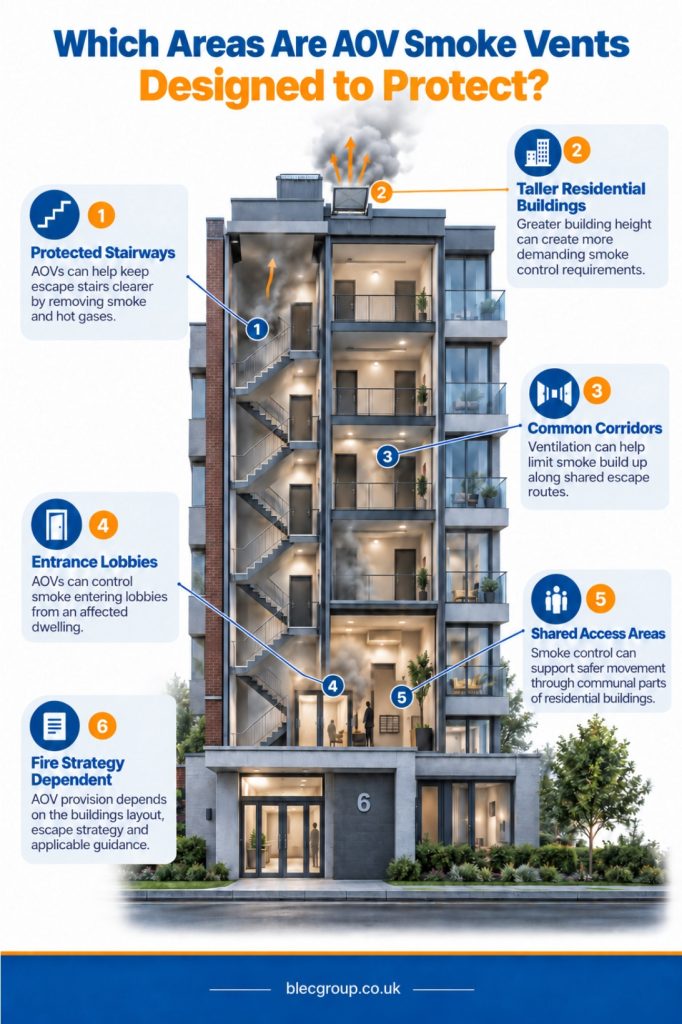
Smoke from a dwelling fire can enter a common corridor or lobby. Once smoke builds up in these areas, people may have less time to reach a safe route. BRE research into common access areas found that these spaces can become smoke filled during a dwelling fire. The research also found that specially engineered natural or mechanical ventilation may be needed to maintain tenable conditions.
This helps explain why designed smoke ventilation forms part of some residential fire strategies. Taller and multi occupied residential buildings can also place greater demands on smoke control because escape routes may be longer and evacuation strategies more complex.
An AOV is therefore not automatically required in every building. The need depends on the building layout, fire strategy and applicable guidance.
What Regulations Govern AOV Smoke Vents?
AOV compliance does not come from one rule. It sits across building regulations, fire safety law and product and system standards.
Approved Document B (Building Regulations 2010)
Approved Document B is the statutory guidance supporting the Building Regulations 2010 in England. It is divided into Volume 1 for dwellings and Volume 2 for buildings other than dwellings.
It sets out guidance on means of warning and escape. This includes smoke ventilation arrangements used in common escape routes. It also references British and European standards where relevant.
The Regulatory Reform (Fire Safety) Order 2005
The Regulatory Reform (Fire Safety) Order 2005 places duties on the building’s responsible person. This can include the building owner, employer or managing agent, depending on the circumstances.
The responsible person must carry out and act on fire risk assessments. Article 17 also requires fire safety equipment to be maintained in efficient working order and good repair.
That means an AOV system cannot simply be installed and forgotten. Its condition and operation need ongoing attention.
The Fire Safety Act 2021
The Fire Safety Act 2021 clarified the scope of the Fire Safety Order for buildings containing two or more sets of domestic premises.
It confirmed that the Order applies to the building’s structure, external walls, common parts and flat entrance doors that open onto those common parts.
This matters where an AOV system serves common areas. Those areas form part of the wider fire safety arrangements covered by the legislation.
The Fire Safety (England) Regulations 2022
The Fire Safety (England) Regulations 2022 introduced further duties for relevant multi occupied residential buildings.
For high rise residential buildings, defined by the regulations as buildings at least 18 metres high or having seven or more storeys, responsible persons have additional information sharing duties. These include providing building and external wall information to the local Fire and Rescue Service.
The regulations also require monthly checks on firefighting lifts and essential firefighting equipment in relevant buildings.
British and European Standards for AOV Products and Systems
Two key standards apply to different parts of an AOV setup.
BS EN 12101-2:2017 covers the AOV vent itself. It sets performance and testing requirements for natural smoke and heat exhaust ventilators, including reliability, wind load resistance and opening performance.
BS 7346-8:2013 covers the wider smoke control system. It deals with planning, design, installation, commissioning and maintenance.
The two standards therefore cover different parts of compliance. The vent needs to meet its product requirements. The complete AOV system also needs to be properly designed, installed, commissioned and maintained.
Who Is Responsible for AOV Testing and Maintenance?
The responsible person is responsible for keeping the building’s AOV system operational. This could be:
- The freeholder
- Landlord
- Managing agent
- Or another person who controls the premises.
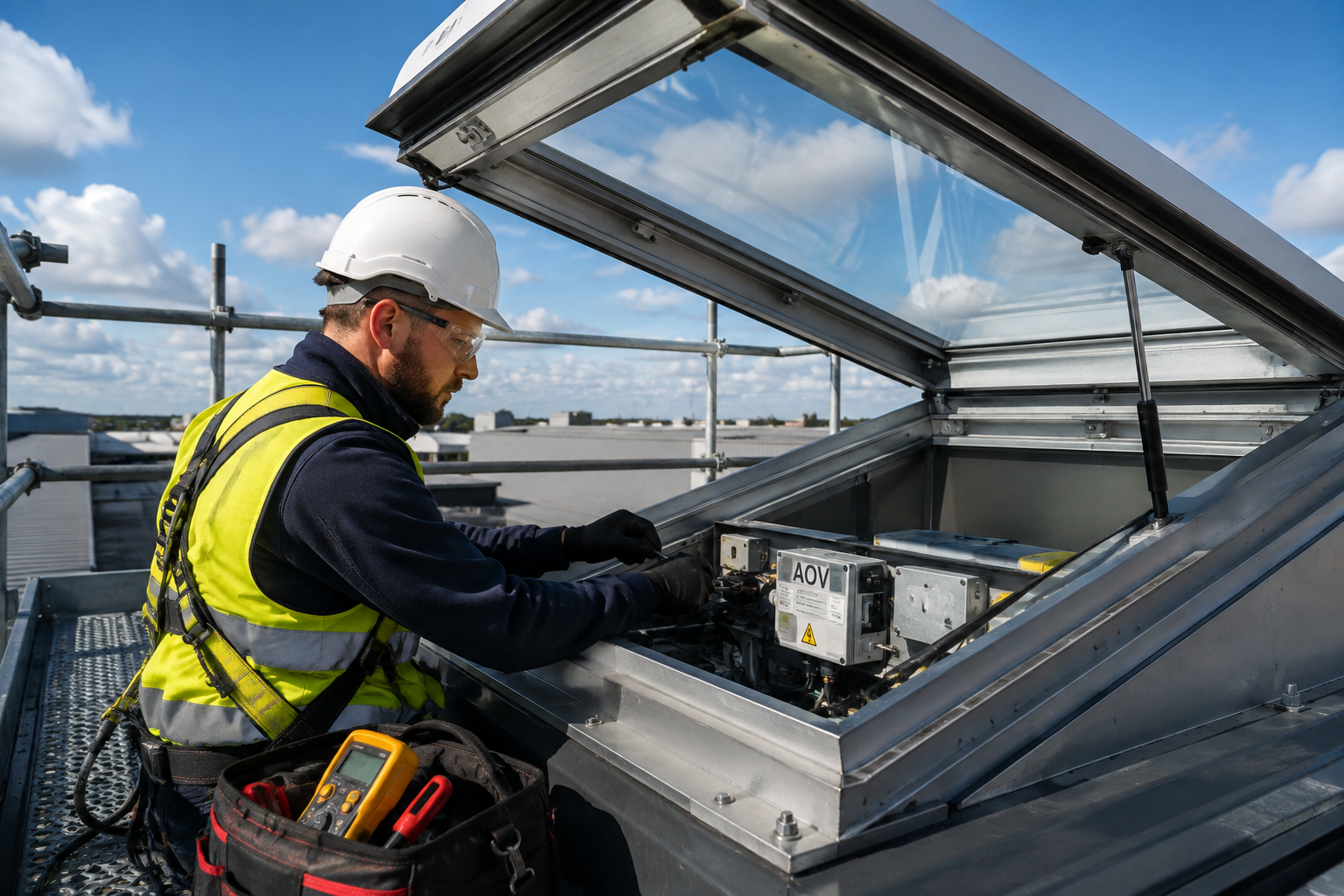
That responsibility continues after installation. The AOV needs regular testing, servicing and maintenance to keep it working as intended.
High rise residential buildings can also have additional checking duties. These include monthly checks of specified firefighting equipment under the Fire Safety (England) Regulations 2022.
Records are important too. Keep service reports, test results, commissioning documents and details of any defects or repairs. These records help show the condition of the system and the work carried out over time.
A formal AOV survey and sign-off can help establish the system’s condition and identify any remedial work that may be needed.
What Are the Main Causes of AOV Non Compliance
AOV compliance can fail for reasons that are not obvious during a basic function test. A vent may open correctly while the wider system still has design, commissioning or maintenance problems.
Product Compliance vs System Design Compliance
A compliant AOV vent does not automatically mean the whole system is compliant. The vent itself must meet its product requirements.
The wider system also needs the correct free area, positioning, control equipment and commissioning. These parts need to work together as designed.
Lack of Documented Maintenance Records
An AOV system may be working, but missing maintenance records can still create a compliance issue. There should be clear evidence of testing, servicing, defects and repairs.
Without these records, the responsible person may struggle to show that the system has been properly maintained.
Systems Installed but Never Formally Commissioned
An installed AOV system still needs proper commissioning before it can be relied upon. Commissioning checks that the system responds correctly and operates as intended.
A vent opening during a basic test does not confirm that the complete system has been commissioned correctly.
Outdated Systems No Longer Meeting Current Guidance
Older AOV systems may have been suitable when they were first installed but may no longer reflect current design expectations.
Changes to the building can also affect the original smoke control strategy. A periodic review can therefore identify issues that may not be obvious from normal operation alone.
Why AOV Regulation Is Becoming Stricter
AOV guidance is under active review because smoke control expectations are changing. The Smoke Control Association and FETA have called for a dedicated smoke ventilation section in Approved Document B. Their position is that clearer and earlier guidance is needed for modern buildings.
Recent research also shows why smoke detection and notification can affect evacuation performance. A government-commissioned study used evacuation simulations across residential buildings ranging from 11 metres to 140 metres in height. It found that corridor smoke detection combined with a building-wide voice alarm reduced total evacuation time to a notable degree.
This research is feeding into wider work on smoke movement, detection and means of escape. For building owners, that means older smoke control arrangements may need closer review as guidance develops.
Approved Document B provides key fire safety guidance
while fire safety legislation places additional duties on the responsible person. Building owners and property managers should seek advice from a competent person where needed, to make sure the AOV system is properly designed, installed, commissioned and maintained in line with the building’s fire strategy and applicable requirements.
When Do You Need Specialist AOV Inspection or Remedial Work?
A specialist AOV inspection becomes particularly important after an overdue service or failed inspection. Defects need identifying and assessing before the system can be relied upon during a fire.
Missing design, commissioning or maintenance records are another reason to arrange an inspection. Without those documents, it can be difficult to confirm what the system was designed to achieve.
Building alterations can also change the fire strategy. Changes to corridors, doors, compartmentation or building use may affect the existing smoke control arrangement.
An upcoming fire risk assessment or regulatory audit is another useful point for a formal review. A specialist can inspect the equipment, identify defects and assess the installation against the relevant requirements.
Where repair, replacement or upgrading is needed, AOV installations can help address systems that no longer meet the required standard.
FAQs
What is an AOV smoke vent system?
An AOV opens automatically after a fire detection signal. It helps remove smoke from areas such as stairways, corridors and lobbies.
Are AOV systems a legal requirement in flats?
Not every flat building requires an AOV. The need depends on the building design, escape strategy and applicable Approved Document B guidance.
What happens if an AOV system fails inspection?
Defects should be assessed promptly. Repairs, replacement or wider remedial work may be needed before the system can be relied upon.
Can an older building's AOV system be non compliant even if it is working?
Yes. A system can still operate but fail to meet current design, commissioning or documentation expectations. A specialist assessment can establish its condition and compliance.
Conclusion
AOV smoke vent compliance involves fire safety law, building guidance and British and European standards. The responsible person must maintain the system. Regular inspections, accurate records and specialist assessments help confirm ongoing compliance.
Not sure whether your building’s AOV system meets current regulations? Get in touch for a specialist survey, sign-off, or remedial installation quote.