Quick answer
A failed AOV test means the smoke ventilation system has not demonstrated correct operation. The fault should be recorded, assessed, repaired by a competent engineer and fully retested before normal testing resumes.
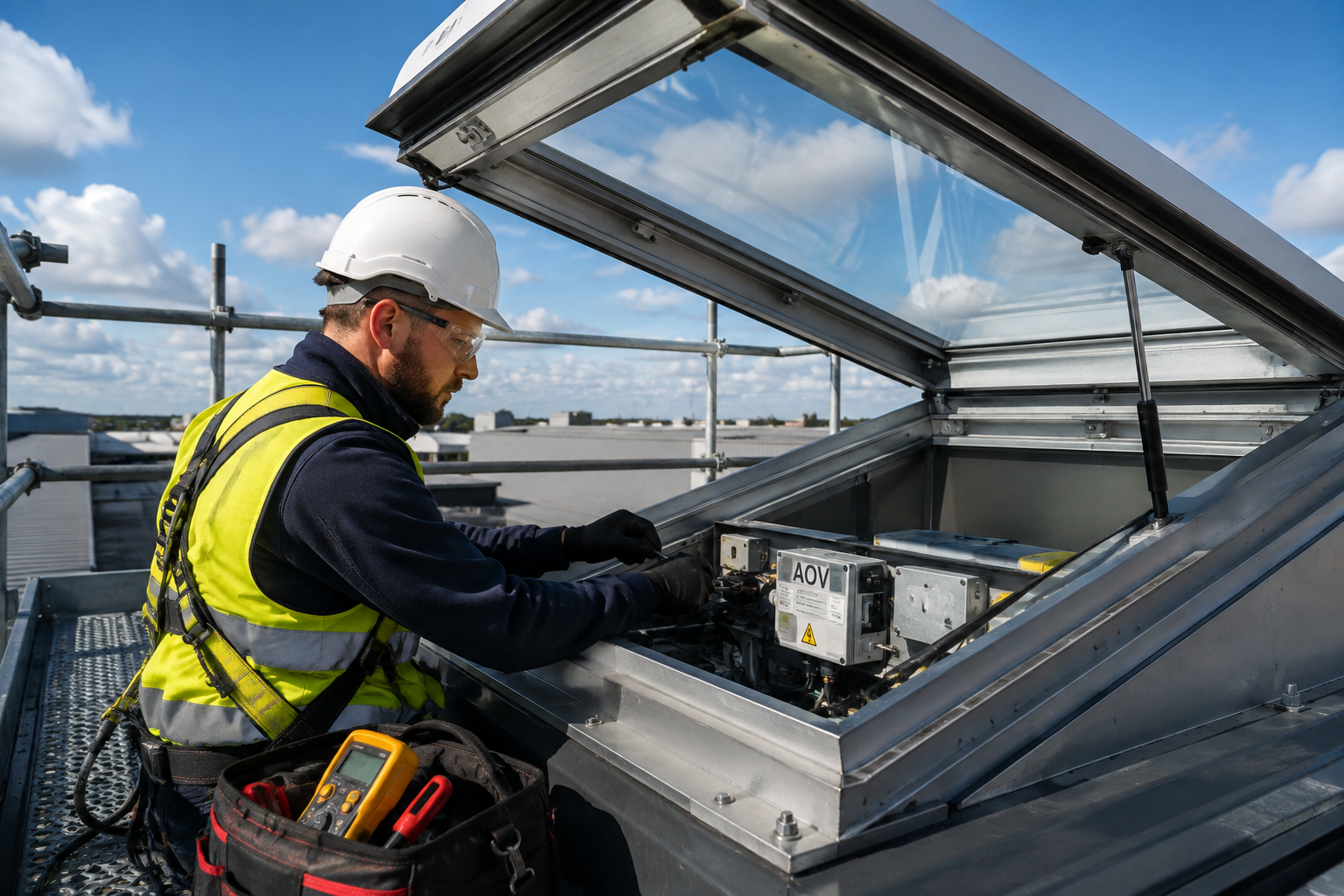
An Automatic Opening Vent opens when smoke or fire is detected to help keep escape routes and stairwells clear. It can be a roof vent, window, façade louvre or smoke shaft damper. Because it forms part of the building’s life safety arrangements, an AOV system failure needs prompt attention rather than being treated as a routine maintenance note.
- A failed AOV test means the system has not demonstrated correct operation.
- Common failures include actuator, control panel, battery, wiring and mechanical faults.
- The defect should be recorded, assessed, repaired and retested by a competent engineer.
- A single failed vent can indicate a wider cause and effect problem.
- Planned servicing and accurate records can help prevent repeat failures.
What Does It Mean When an AOV Fails a Test?
A failed test means the AOV system has not completed the operation expected from it. The A failed AOV test means the smoke ventilation system has not demonstrated the correct operation for the building. The test should confirm that:
- The correct vent opens
- The vent opens in the correct direction
- Other floors remain closed as designed
A failure can affect one component or the wider cause and effect sequence. For example, a vent may not open at all, open the wrong way or allow vents on other floors to operate when they should remain closed.
CROSS UK examined around 50 cause and effect tests in existing residential blocks and estimated that 60% to 80% of the buildings surveyed failed their initial testing. UK field data on smoke control system test failures also records specific failures involving incorrect opening and failure of the system to isolate other floors.
That is why a failed result should be treated as an active fire safety defect. It needs to be recorded, investigated and addressed rather than left until the next routine service.
What Causes an AOV System to Fail?
An AOV can fail because the vent itself cannot move, the electrical signal is interrupted or the wider control sequence does not behave correctly.
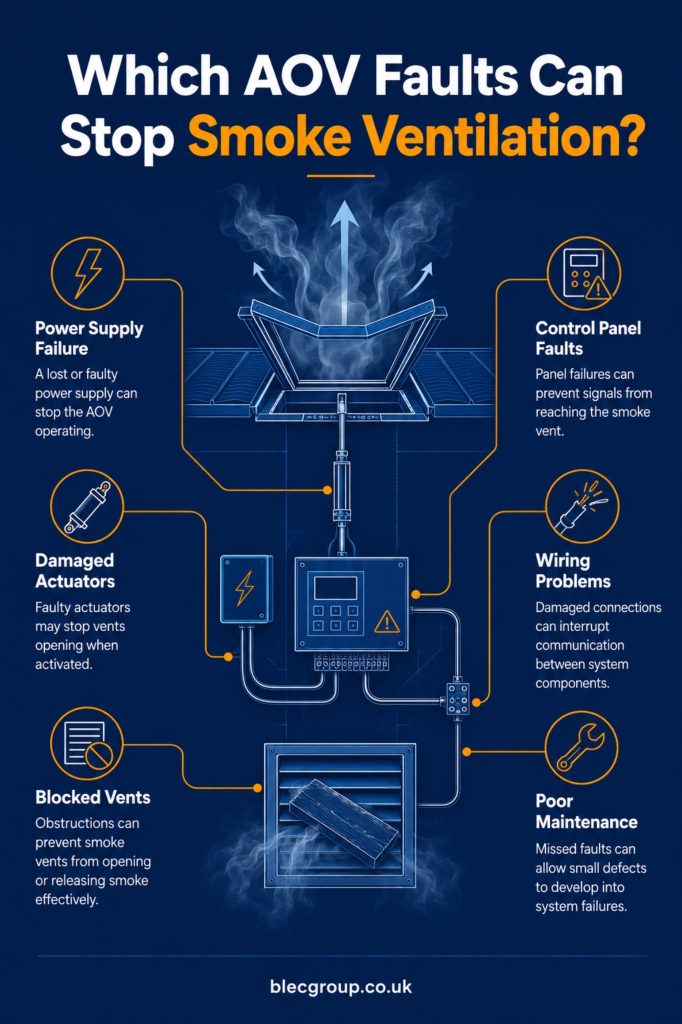
The main failure points are:
Actuator or Motor Faults
The actuator drives the vent open when the system receives its operating signal. A failed or restricted actuator can leave the vent closed or only partially open.
Control Panel or Electrical Faults
The control panel receives signals from the fire detection system and controls the AOV equipment. Faults in the panel, power supply or associated wiring can stop the correct signal reaching the vent.
Battery or Backup Power Failure
AOV systems need backup power so they can operate during a mains failure. A degraded battery or battery charging fault can prevent the system from performing correctly when backup operation is required.
Manual Control or Wiring Problems
Manual override controls provide another route for operating the system. Damaged wiring, loose connections or faulty controls can interrupt that operation even when the vent mechanism itself is working.
Vent or Mechanical Faults
The vent can also fail for physical reasons. A stuck mechanism, damaged hinge or obstruction can stop it opening properly despite the control system sending the correct signal.
Cause and Effect Failures
A cause and effect failure happens when the AOV system does not carry out the required actions in the correct sequence after a fire signal. This can mean the wrong vent opens, a required vent stays closed or vents on other floors open when they should remain shut.
The problem can therefore involve the way the detector, control panel and vents communicate, rather than a fault with one vent alone.
Is a Failed AOV Test a Serious Fire Safety Issue?
It can be, particularly when the failed component affects a protected escape route or the building’s designed smoke control strategy. The seriousness depends on what failed, where the AOV serves and whether any alternative smoke control measures are available.
A failed actuator, detector, control panel or backup battery can leave the system unable to perform its intended function. A blocked vent can create a similar problem even when the electrical controls operate correctly.
A simple opening check also has limits. BRE research into smoke ventilation in residential buildings found that actual smoke control performance can be affected by external conditions and that natural smoke dilution in common corridors cannot always provide the conditions assumed by a fire strategy.
That is why a failed test needs investigation rather than repeated system resets.
What Should You Do If an AOV Fails?
Once a failed test has been identified, the priority is to establish exactly what has gone wrong and what that means for the building. Avoid treating the result as a single vent fault until the wider system has been checked.
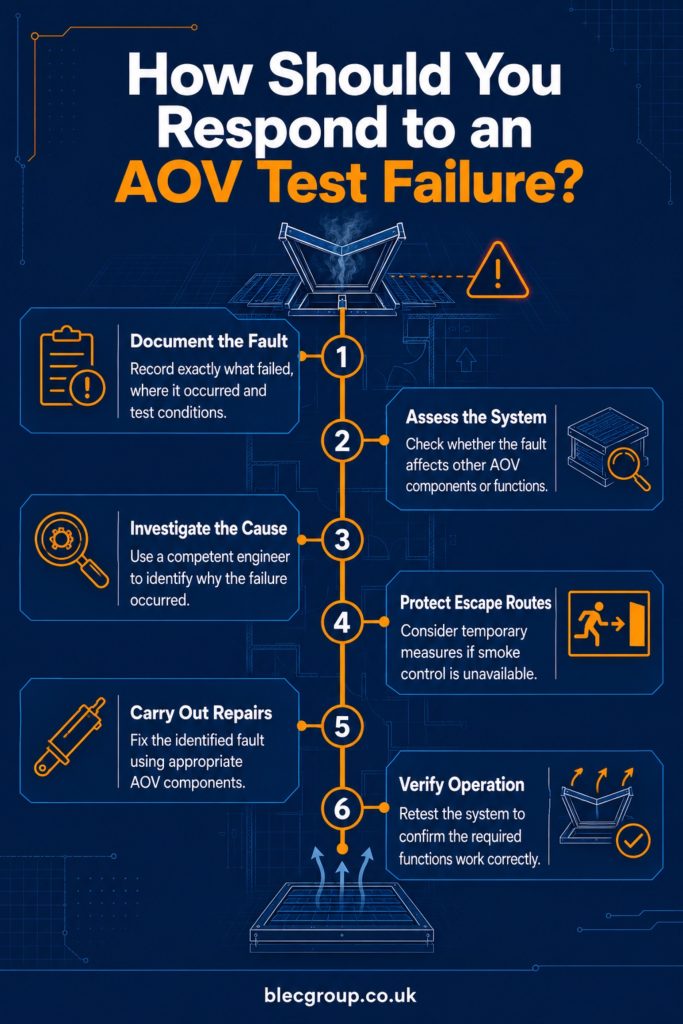
Record the Test Result
Document the failed function, affected location and conditions during the test. This gives the engineer a clear starting point and creates a useful record for the building’s fire safety file.
Check the Wider System
Look beyond the visible fault. Check whether the issue affects the control panel, detection signal, power supply, other vents or the programmed operating sequence.
Arrange Competent Investigation
The cause should be investigated by an engineer with suitable smoke control system experience. Our AOV repair service can provide repair and callout support for identified AOV faults.
Put Appropriate Precautions in Place
Where the failed system leaves an escape route without its intended smoke control, the responsible person should consider suitable temporary measures until the defect is resolved.
Confirm the System Is Working Again
After repairs, carry out the required testing to confirm that the affected functions operate correctly as designed. The system should only return to its normal maintenance cycle once the repair has been properly verified.
What Must the Responsible Person Do After an AOV Failure?
The responsible person should treat the failed AOV test as a fire safety issue that needs a clear response. Start by recording the exact fault, then assess how it affects the smoke control system and escape routes.
According to the House of Commons Library, the responsible person for an occupied building must carry out fire risk assessments and put appropriate fire safety measures in place where needed. The briefing also explains that fire and rescue services have powers to enforce these duties.
After the failure has been recorded and assessed:
- Identify the exact defect such as a failed actuator, detector, battery or control panel.
- Check the affected escape route and determine whether temporary precautions are needed.
- Arrange competent repair work rather than repeatedly resetting the system.
- Update the fire safety records with the fault and remedial work completed.
- Retest the AOV system to confirm the intended sequence works correctly.
A failed AOV should remain under active review until the fault has been properly resolved and the system has demonstrated correct operation again.
How Can You Prevent an AOV From Failing Again?
Repeat AOV faults are often linked to missed maintenance, weak backup power, restricted vent movement or recurring control faults. The best prevention routine checks each part of the system and uses previous service records to spot problems early.
To make sure your AOV system keeps operating correctly, you need to:
- Service the control panel to identify faults before they disrupt the AOV sequence.
- Check backup batteries for reduced capacity, charging faults or signs of deterioration.
- Test actuator operation to confirm each vent opens fully rather than moving only partially.
- Inspect vent mechanisms for dirt, damage or obstructions that could restrict movement.
- Test the cause and effect sequence to confirm detectors, controls and vents respond in the correct order.
- Review previous fault records to identify repeated component failures or missed servicing intervals.
For planned servicing and preventative testing, our AOV maintenance service covers control panels, battery backup systems and simulated fire condition testing.
Keeping accurate maintenance records also helps you track recurring faults and confirm that scheduled checks have been completed. For high rise residential buildings, this record keeping has a specific regulatory purpose, as the Fire Safety (England) Regulations 2022 require specified fire safety information to be kept available for the fire and rescue authority.
FAQs
What happens if an AOV system fails a test?
The failure should be recorded, investigated and repaired by a competent engineer. The system should then be fully retested.
Does a failed AOV make a building non compliant?
A failed test indicates that the system has not demonstrated the required operation. The responsible person should investigate the defect and take appropriate remedial action.
Can a building remain occupied if an AOV has failed?
There is no universal answer. The decision depends on the fault, fire strategy, building risk and any temporary measures introduced while repairs are arranged.
How quickly should a failed AOV be repaired?
It should be treated as a prompt fire safety defect. The required response depends on the fault and its effect on the building’s escape and smoke control arrangements.
Does an AOV need to be retested after repair?
Yes. Retesting confirms that the repair has resolved the original fault and that the intended operating sequence works correctly.
How often should an AOV system be serviced?
There is no single interval for every system. The maintenance regime should reflect the system design, building risk and the relevant smoke control maintenance guidance.
Conclusion
A failed AOV test is a fire safety defect, not a routine maintenance note. The fault should be identified, its impact assessed, repaired by a competent engineer and the system retested before normal testing resumes. Good maintenance and accurate records can also reduce the risk of repeat failures.
Request a survey for AOV repair, testing and maintenance support.