Quick answer
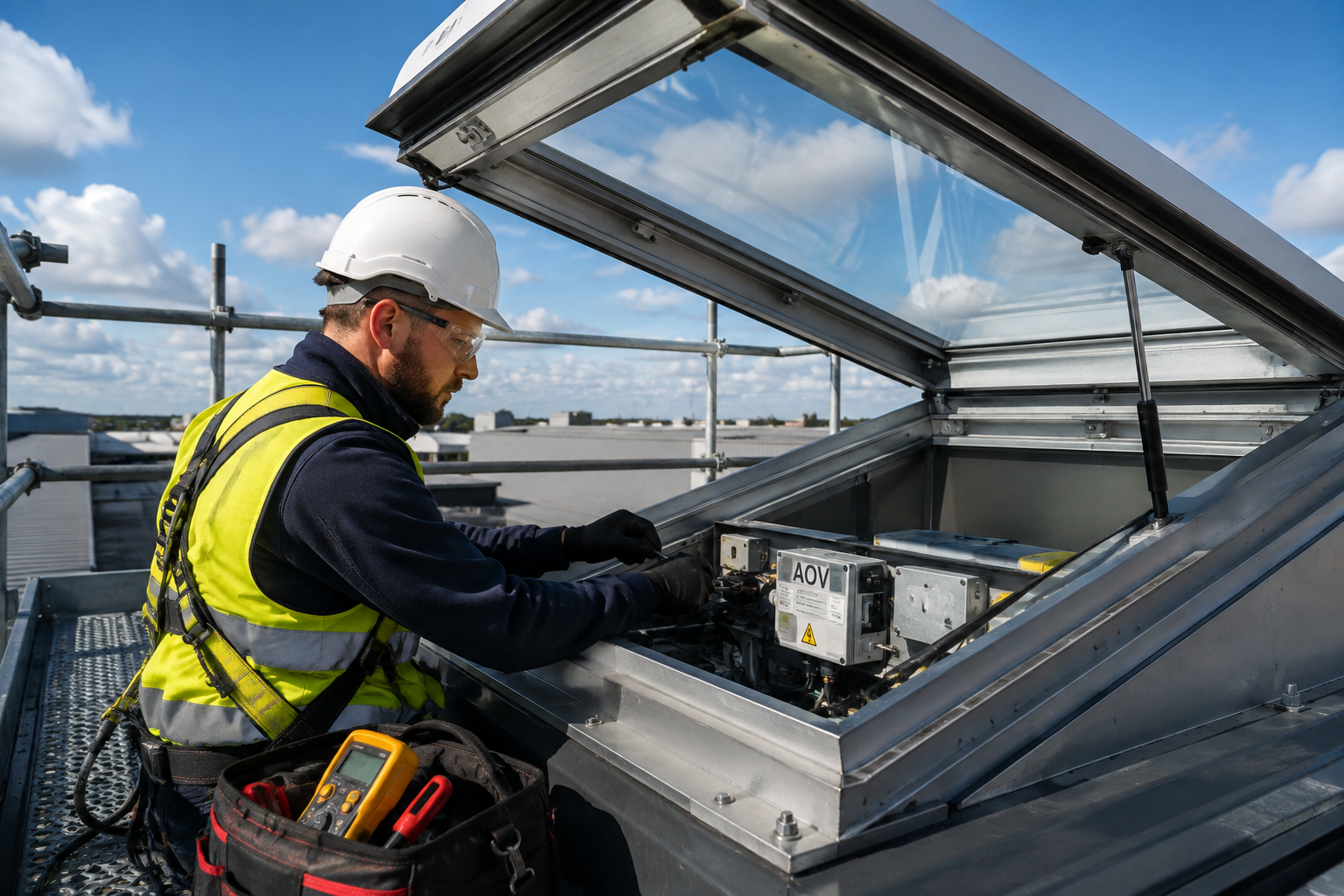
Automatic Opening Vents open automatically during a fire to help release smoke and protect escape routes. Correct design, installation and maintenance help the system perform its smoke-control role when needed.
Automatic Opening Vents (AOVs) help release smoke during fires, supporting safer conditions in stairwells, corridors and escape routes. They may include roof vents, louvres or powered windows connected to detectors and a control panel. Their effectiveness depends on the building’s smoke-control design, suitable installation and regular maintenance.
Building owners and property managers should understand relevant regulations and address faults promptly.
- AOVs help control smoke and protect designated escape routes during a fire.
- System design depends on the building layout and its fire strategy.
- Installation must follow applicable building regulations and relevant standards.
- Routine checks and competent servicing help identify faults before they affect operation.
- Defects affecting an AOV should be investigated, corrected and documented promptly.
What Is an Automatic Opening Vent (AOV)?
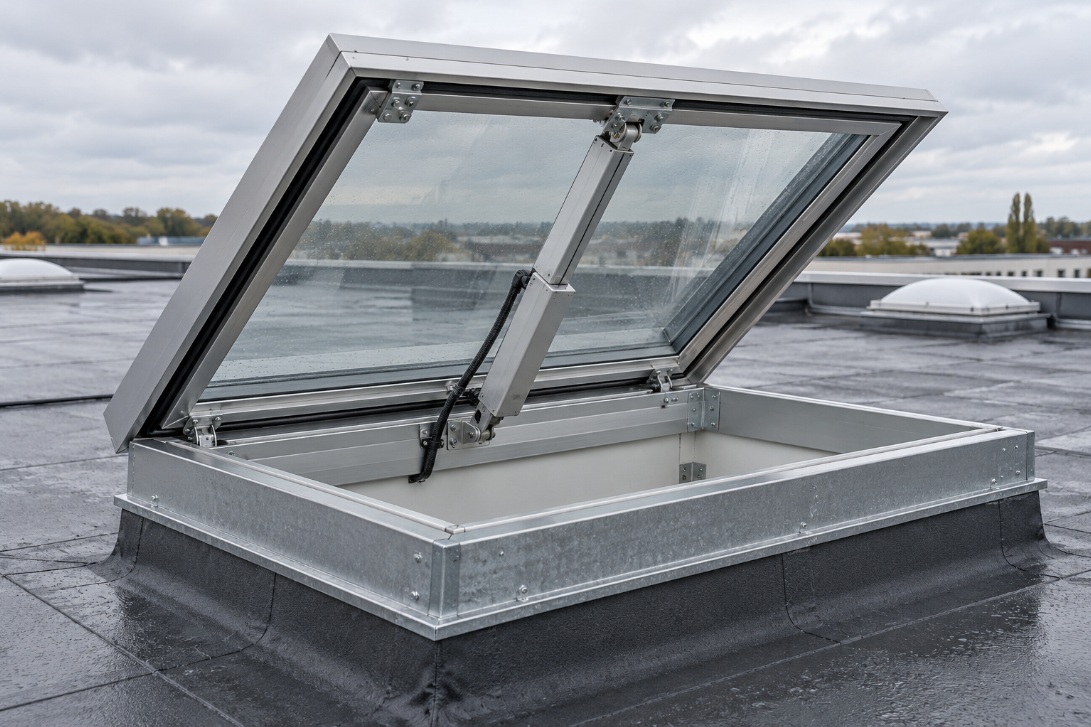
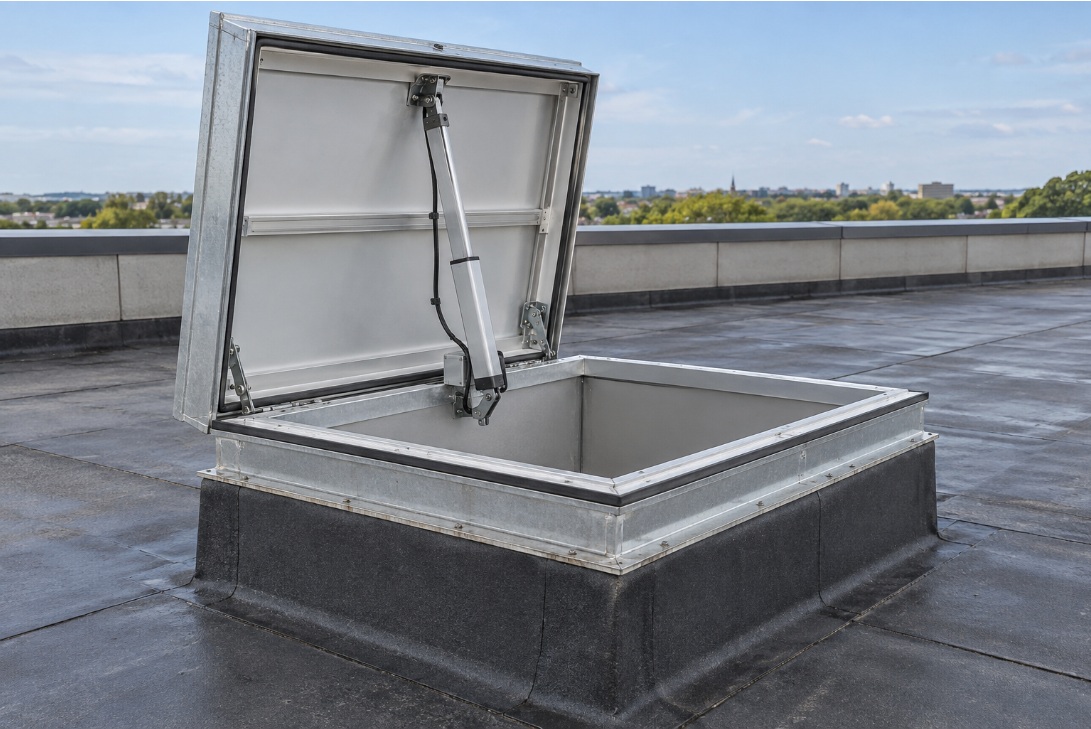
An Automatic Opening Vent (AOV) is an automatically operated opening, such as a rooflight, window or louvre, designed to release smoke during a fire. It forms part of a wider smoke-control system that may include:
- Detectors
- A control panel
- Actuators
- And backup power.
In technical product terminology, a certified Natural Smoke and Heat Exhaust Ventilator (NSHEV) is a specific type of ventilator covered by a relevant product standard. An ordinary automatic window does not automatically meet fire-safety requirements.
The equipment and its installation must suit the building’s smoke-control design.
How Does an AOV System Work?
An AOV system follows a planned sequence of actions, such as:
- Activation: A smoke detector or another approved device sends a signal when the relevant activation conditions are met.
- Control panel response: The control panel processes the signal and activates the designated opening mechanism.
- Vent operation: An actuator opens the selected vent, providing a designed route for smoke to escape.
- Manual operation or backup power: Depending on the system, authorised users may have manual controls, while backup batteries may support operation if the mains supply fails.
The exact response depends on the building’s fire strategy. Some arrangements require vents on the fire floor and at the head of a stairwell to open while vents elsewhere remain closed. Commissioning tests must confirm that the system follows its intended sequence.
Why Are AOV Systems Important for Fire Safety?
Smoke can spread through stairwells, corridors and lobbies, making escape more difficult and exposing occupants to dangerous conditions. An appropriately designed AOV system provides a planned outlet for smoke, helping control its accumulation and supporting evacuation and firefighter access.
Smoke alarms and AOVs perform different functions. An alarm alerts people to a potential fire, while an AOV carries out a smoke-control function after receiving the required activation signal.
The UK fire and rescue service statistics report that 92% of households had a working smoke alarm in the year ending March 2024. Across five years of linked data, people living in homes without a working smoke alarm were around 11 times more likely to die in a dwelling fire.
AOVs must work alongside fire alarms, compartmentation, escape planning and the other measures required by the building’s fire-safety strategy.
Where Are Automatic Opening Vents Used?
AOVs are commonly installed in buildings where the fire strategy requires smoke ventilation. Typical locations include:
- Stairwells: Roof vents or high-level openings can provide an outlet for smoke from shared escape stairs.
- Shared corridors and lobbies: Vents can help control smoke in common access areas serving flats or other occupied spaces.
- Roof spaces and rooflights: Suitable roof-mounted vents may discharge smoke outside the building.
- Commercial and residential buildings: Offices, blocks of flats and other premises may require smoke ventilation based on their layout and fire-safety design.
The location, opening area and activation sequence depend on the building. Not every building needs the same arrangement, so the system must follow the relevant fire strategy and applicable requirements.
What Are the Different Types of AOV Systems?
The way a building releases smoke depends on its layout, escape routes and fire strategy. Some designs use natural airflow, while others require powered extraction, and the opening equipment must be suitable for its intended smoke-control role.
The main types (which use different smoke-control methods) are:
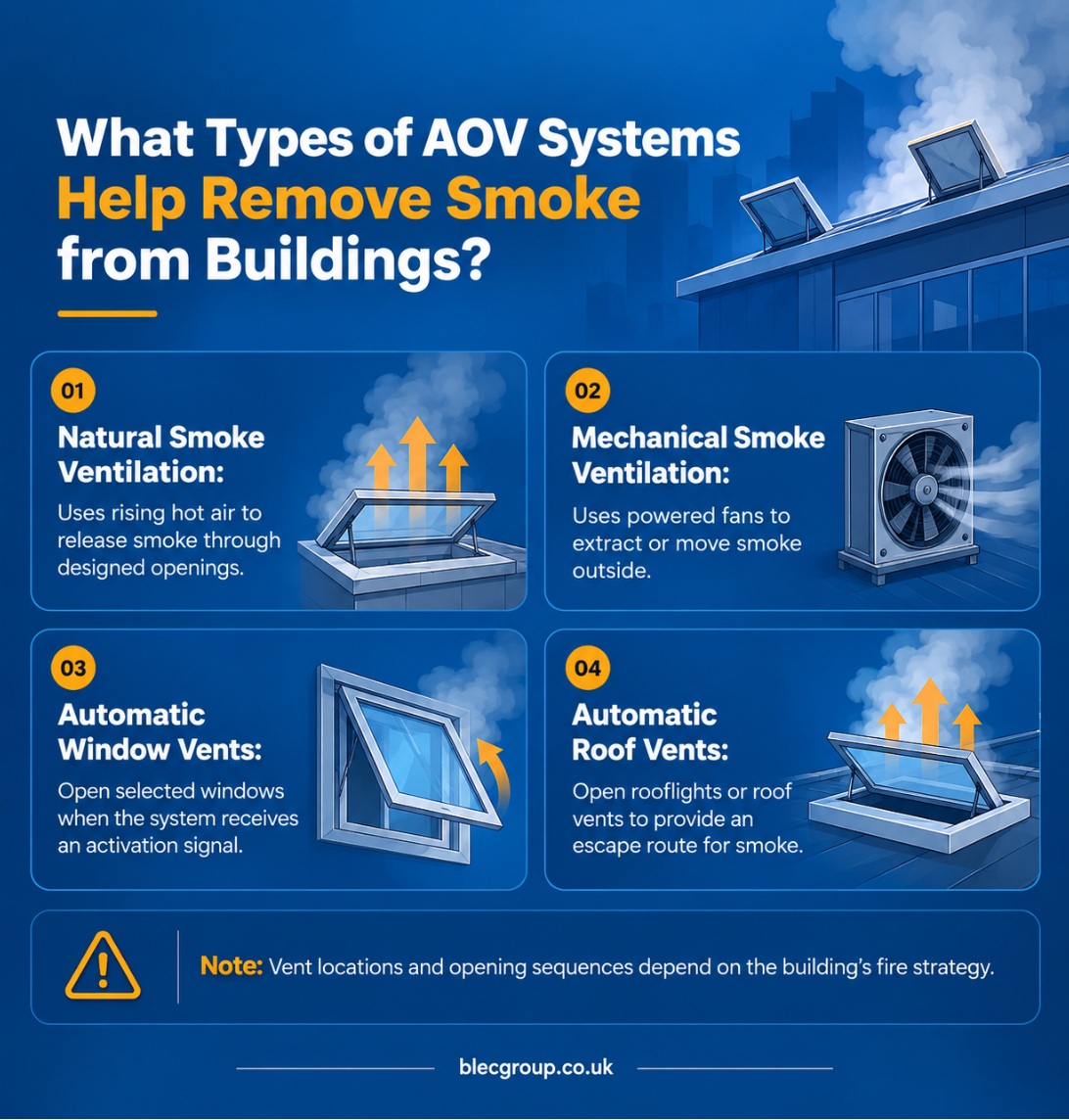
The choice and design of an AOV system should reflect the building’s layout, fire strategy and smoke-control requirements. For further technical guidance, the Smoke Control Association’s guidance on smoke and heat exhaust ventilators explains key considerations for natural smoke and heat exhaust ventilation.
However, its edition and applicability should be checked against the current standards and requirements for each project.
What Are the Main Components of an AOV System?
An AOV system combines detection, control, opening mechanisms and power arrangements. Each component must work with the others to produce the smoke-control response specified for the building.
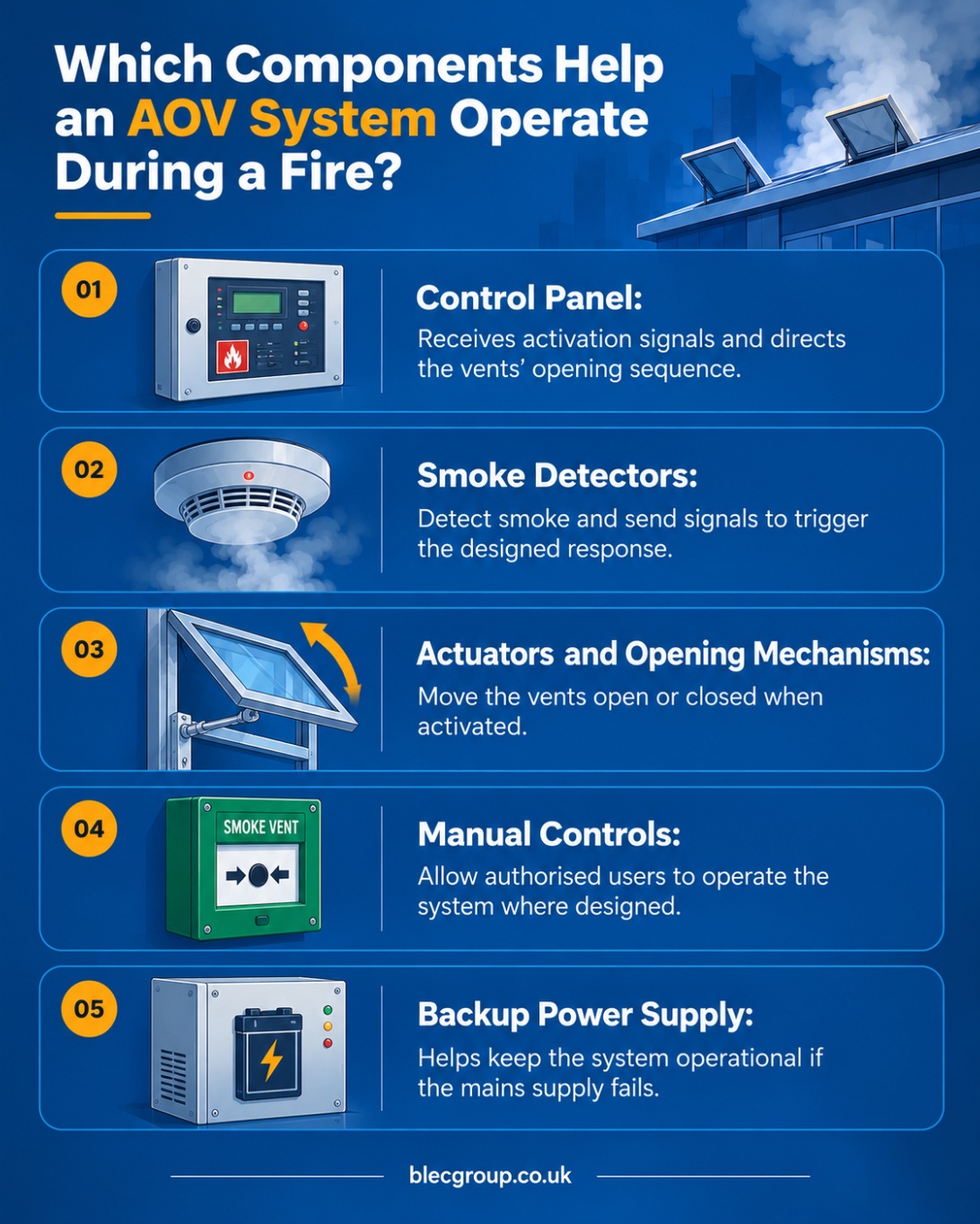
AOV Control Panels
The control panel receives activation signals and controls the required operating sequence. It may also display fault indicators to help identify problems with connected equipment or power supplies.
Smoke Detectors and Activation Devices
Smoke detectors or other approved activation devices provide the signals that trigger the designed response. Their correct operation and connection to the control panel are essential.
Actuators and Opening Mechanisms
Actuators provide the movement needed to open or close the vent. Damaged mechanisms, obstructions or component failures can prevent the vent from reaching its required position.
Manual Controls and Override Switches
Where the system design provides them, manual controls allow authorised users to activate or operate the system. Their purpose and operation should be clear to the people responsible for the building.
Backup Power Supplies
Backup batteries or other power arrangements help an AOV system operate if the main electrical supply fails, depending on its design. These supplies need to be checked to confirm they can support the system when required.
A professional AOV survey and BS 7346-8 compliance check can help assess the system’s condition, identify defects and document any remedial work needed.
What Are the UK Regulations and Standards for AOV Systems?
An AOV is only one part of a building’s smoke-control strategy. Its location, activation sequence and ongoing condition must all support the building’s intended response to a fire. The relevant requirements cover building regulations, technical standards and the ongoing maintenance of fire-safety equipment:
Building Regulations and Approved Document B
Approved Document B fire safety guidance covers dwellings and buildings other than dwellings in England. Its provisions address smoke ventilation in relevant corridors, lobbies and stairways.
The government’s guidance collection includes 2026 amendments, so building owners and project teams should check the applicable volume, edition and transitional arrangements for their project.
BS EN 12101 Standards and BS 7346-8
BS EN 12101-2:2017, the standard for natural smoke and heat exhaust ventilators, sets out product requirements and test methods for these ventilators. BS 7346-8 provides guidance on the planning, design, installation, commissioning and maintenance of smoke-control systems.
Product conformity does not by itself confirm that the installed system is correctly configured or properly maintained.
Fire Safety Responsibilities for Building Owners and Managers
The person legally responsible for fire safety in a building must ensure that relevant fire-safety equipment, including AOVs where installed, is properly maintained. Under Article 17 of the Regulatory Reform (Fire Safety) Order 2005, covered premises must have suitable maintenance arrangements, and fire-safety equipment must be kept in efficient working order.
For blocks of flats and commercial buildings, owners and managers should establish who arranges AOV servicing, records inspection results and ensures faults are addressed. The responsible person’s legal duties remain important even when a contractor carries out the maintenance.
How Much Does AOV Installation Cost in the UK?
AOV installation costs depend on the building and the scope of work. Key factors include:
- The number and type of vents
- Opening sizes
- Access equipment
- Control panels
- Detectors
- Actuators
- Cabling
- And electrical work.
Integration with existing fire alarms or smoke-control equipment can also affect the price.
Replacing an existing component may involve less work than installing a new system that needs additional controls, wiring or building alterations. Commissioning, documentation and any required remedial work also affect the overall cost.
A site-specific quotation should identify the equipment, installation work, testing and handover documentation included. The same applies to servicing and maintenance, where costs depend on system complexity and the work required.
What Are the Most Common AOV Faults?
AOV faults can affect the opening mechanism, controls, activation devices or power supply. Because the system has a fire-safety function, faults need prompt investigation by a competent specialist.
AOV Windows or Vents Not Opening
A failed actuator, obstruction, wiring issue or control-panel fault may prevent a vent from opening when activated.
AOV Systems Failing to Close
Damaged mechanisms, control faults or an incorrect operating signal can stop a vent from returning to its intended position.
Control Panel Faults and Warning Lights
A warning light or fault indicator may identify a problem with a circuit, component, detector or power supply. The fault code and system records can help a technician investigate it.
False Activations and Unexpected Opening
A faulty activation device, wiring problem or control issue may trigger an unexpected response. The cause needs to be identified before the system can be relied upon.
Power Supply and Battery Faults
A mains supply failure, depleted backup battery or electrical fault may affect the system’s readiness or operation. Power problems should be investigated and recorded.
Building staff should report defects promptly and avoid attempting unauthorised repairs to life-safety equipment.
Approved Document B outlines essential guidance for AOV systems
while fire safety legislation sets out ongoing duties for the responsible person. Building owners and property managers should consult a competent specialist when needed to ensure AOV systems are correctly designed, installed, commissioned and maintained in accordance with the building’s fire strategy, relevant standards and legal requirements.
Who Is Responsible for AOV Maintenance in a Block of Flats?
Responsibility depends on the building’s ownership, management arrangements and applicable legal duties. In premises covered by the Regulatory Reform (Fire Safety) Order 2005, the responsible person must ensure relevant fire-safety equipment is maintained in efficient working order.
In a block of flats, the freeholder, landlord, management company or managing agent may arrange servicing, while a specialist contractor carries out the work. Leases and management agreements can help clarify these responsibilities. Outsourcing maintenance does not automatically remove the responsible person’s legal duty.
Industry guidance commonly combines regular functional checks by a building-familiar person with periodic servicing by a competent specialist, including a full annual service. The appropriate schedule should follow the system documentation and applicable standards.
How Do You Know If an AOV System Is Compliant and Working Correctly?
Building owners and managers should review:
- System’s design information
- Relevant product certification
- Commissioning records
- Inspection reports
- And maintenance history.
Records should also show whether previously identified defects have been corrected.
Regular checks by competent people, accurate records and prompt fault resolution help demonstrate that the system has been appropriately installed and maintained.
FAQs
Can an AOV Open Automatically Without a Fire?
Yes. A scheduled test, ventilation function or false activation signal may open it, depending on the system.
Can an AOV System Operate During a Power Cut?
Some systems have backup batteries or other backup power arrangements. Check the system specifications and maintenance records.
Can Residents Manually Open or Close an AOV?
Only where the system provides authorised controls and the building’s instructions permit their use.
What Happens If an AOV Is Stuck Open or Closed?
Report the fault promptly to the building manager, as it may affect smoke control or building security.
Can a Faulty AOV System Affect Fire Safety Compliance?
Yes. An unresolved fault may compromise the intended smoke-control strategy and require investigation, repair and documentation.
Can an AOV System Be Repaired Instead of Replaced?
Often. A competent specialist can diagnose the fault and assess whether repair or replacement is appropriate.
Conclusion
Automatic Opening Vents support a building’s fire-safety strategy when correctly designed, installed and maintained. Regular checks, documented servicing and prompt fault investigation help keep the system ready for its intended role during a fire.
Need help with an AOV system? Contact us today to discuss your installation, inspection or maintenance requirements and request a quote.